
- By Adler Talent Solution
- May 10, 2025
Employee Well-Being in 2025: The Data Behind Mental Health Programs in the Workplace
xyz

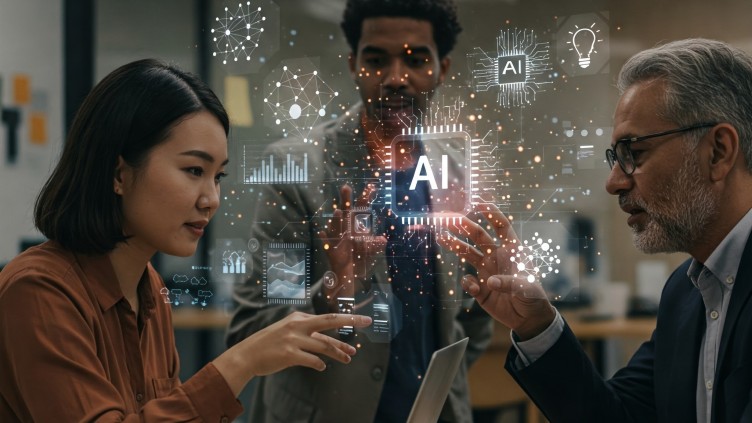
In today's rapidly evolving job market, recruitment has shifted from a traditional, paperwork-driven process to a far more strategic and technology-powered function. Modern organizations in India and around the world are no longer hiring just to fill open positions—they are building future-ready teams capable of driving innovation and long-term business growth.
One of the most transformative forces behind this evolution is Artificial Intelligence (AI). What once seemed like a futuristic concept has become an essential part of recruitment strategies across industries. From automated resume screening to predictive hiring models, AI is redefining how organizations attract, assess, and hire talent.
This blog explores The Role of AI in Recruitment, its applications, its advantages, the challenges it brings, and why Indian businesses are rapidly embracing AI-powered hiring solutions.
Over recent years, AI adoption in HR technology has accelerated at an unprecedented pace. With remote work, virtual hiring, and digital transformation becoming the norm, recruiters increasingly rely on AI-driven tools to enhance efficiency and accuracy.
Several factors have contributed to the rise of AI in recruitment, especially in India:
Reports from leading global HR studies indicate a steady increase in AI adoption for recruitment, with most organizations implementing at least one AI-powered hiring tool. In India, sectors such as IT, BFSI, healthcare, manufacturing, and e-commerce are leading the shift by incorporating AI-driven Applicant Tracking Systems (ATS), chatbots, and predictive hiring solutions.
AI is not limited to just one part of the hiring process—it supports the entire journey from sourcing candidates to onboarding them. Below are the most impactful applications.
Recruiters often spend hours scanning resumes to identify candidates who match job criteria. AI-powered ATS platforms now automate this process by:
This enables recruiters to focus more on human-centric tasks such as interviews, relationship building, and strategic planning.
For Indian companies dealing with thousands of applications for a single role—such as IT support, BPO, or entry-level positions—AI has become indispensable.
Candidate engagement has a direct impact on employer branding. AI chatbots help organizations interact with applicants in real time by:
This ensures a seamless communication cycle, reducing candidate drop-offs—an issue faced by many Indian recruiters, especially during large-scale hiring.
Predictive analytics is one of the most powerful contributions of AI to recruitment. Using historical hiring data, performance trends, and employee behaviour patterns, AI can:
For example, if previous high performers in a role shared certain skills or behavioural traits, AI tools can identify similar attributes in new candidates. This helps companies make more informed hiring decisions.
Unconscious bias is one of the most common challenges in recruitment. AI can help minimize it by:
However, AI algorithms must be monitored regularly to prevent algorithmic bias caused by flawed or unrepresentative training data.
AI-powered interview platforms analyse:
While this technology is still evolving, it helps recruiters understand behavioural traits and soft skills more objectively. When used transparently, such tools assist organizations in making well-rounded hiring decisions.
AI supports:
These tools create unbiased, standardized testing environments where each candidate is evaluated fairly.
AI also helps recruiters identify passive candidates through:
This gives organizations access to talent pools that may not actively apply for jobs but are ideal for specialized roles.
AI brings several advantages that significantly enhance the hiring workflow:
AI automates repetitive tasks such as screening, scheduling, and initial communication, reducing time-to-hire significantly. For industries with high attrition or seasonal hiring demands, this speed is invaluable.
AI systems can handle thousands of applications simultaneously without compromising quality. This makes them ideal for:
By reducing manual workload, AI:
Candidates prefer fast, transparent hiring processes. AI ensures:
A positive candidate experience strengthens employer branding—a key factor for Indian millennials and Gen Z job seekers.
AI analyses skill sets, behavioural traits, performance indicators, and cultural compatibility. This reduces mismatched hiring and improves retention rates.
Data-driven hiring decisions offer:
Recruiters gain valuable insights that help refine hiring strategies.
Despite its benefits, AI is not perfect. Organizations must address key concerns.
Handling candidate data comes with serious responsibilities. Companies must ensure:
AI must be trained with accurate and diverse datasets. If not, it may unintentionally:
Regular audits are essential.
Human intuition remains irreplaceable. Over-automation can:
AI should assist—not replace—human recruiters.
Candidates and recruiters may not always understand how AI arrives at decisions. Organizations must be transparent about:
As India moves towards a more tech-driven economy, several emerging AI trends are set to shape the recruitment landscape:
AI will deliver personalized job recommendations, communication, and career path insights.
AI tools will analyse professional histories, recommendations, and credibility factors.
Future systems may evaluate empathy, teamwork, leadership, and adaptability.
Companies will forecast hiring needs months or even years in advance.
Virtual offices, VR-based interviews, and immersive candidate experiences will become mainstream.
India has one of the world’s largest and most dynamic job markets. With millions of job seekers and thousands of recruiters, traditional hiring methods often fall short.
AI empowers Indian businesses by offering:
From startups to large enterprises, AI enables organizations to hire smarter, faster, and more effectively.
Artificial Intelligence is reshaping the recruitment landscape in India and worldwide. It enhances accuracy, improves efficiency, reduces bias, and delivers meaningful insights that enable better hiring decisions.
However, successful adoption requires a balanced approach—one that combines AI-driven automation with human empathy, intuition, and relationship-building skills.
As businesses continue to embrace digital transformation, AI in recruitment will not just be an option—it will be a competitive necessity.
In today's fast-evolving talent landscape, recruitment is no longer just about filling vacancies—it's about strategic hiring, data-driven decisions, and enhancing the candidate experience. Artificial Intelligence (AI) has emerged as a game-changer, revolutionizing how organizations attract, evaluate, and retain top talent.

© 2025 Adler Talent Solutions ™. All Rights Reserved. Design & Developed By : Traj Infotech Pvt. Ltd.
 Chat with us